Ozone Treatment System Evaluation
Review whether ozone technology is a suitable option for identified water quality and treatment objectives.
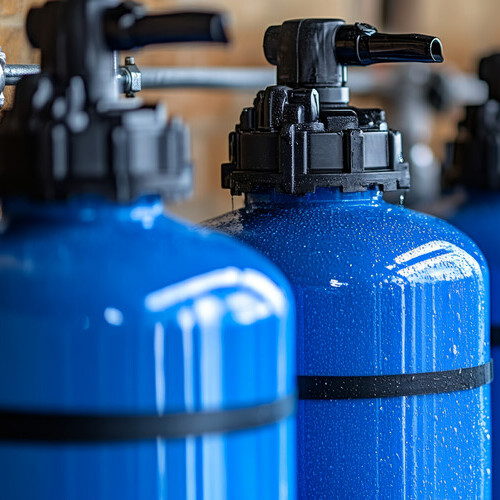
Water treatment technology has advanced significantly over the years, providing property owners with different ways to address specific water quality concerns. One of these technologies is ozone water purification.
Guillen Family Plumbing provides water treatment solutions in Hesperia, Victorville, CA, and surrounding High Desert communities. We help customers explore ozone-based treatment systems and determine whether the technology is appropriate for their water quality goals and plumbing needs.
Ozone is a powerful oxidizing agent used in professionally designed water treatment systems to assist with microbial disinfection and certain oxidation processes.
Whether you're evaluating water treatment for a specialized residential application or an appropriate commercial system, selecting the correct equipment requires careful consideration of source water, treatment objectives, and system safety.
Ozone is a form of oxygen made of three oxygen atoms, commonly represented as O3. It is a highly reactive substance used in certain water treatment processes.
In a professionally designed system, ozone is generated onsite and introduced into water under controlled conditions.
Ozone reacts with certain substances in the water through oxidation. With appropriate operating conditions and sufficient contact, it can also inactivate various microorganisms.
The effectiveness of ozone treatment depends on the source water, ozone concentration, treatment time, water chemistry, and equipment design.
Because ozone breaks down relatively quickly, it does not maintain an ongoing disinfectant residual throughout a plumbing distribution system. Additional treatment or protection may therefore be required.
Ozone treatment systems require appropriate equipment selection and engineering. Different applications may use different supporting components and treatment stages.
Review whether ozone technology is a suitable option for identified water quality and treatment objectives.
Evaluate plumbing connections, installation conditions, and system requirements for suitable ozone equipment.
Explore properly engineered ozone disinfection systems for applications requiring controlled microbial treatment.
Evaluate ozone oxidation as part of a treatment approach for selected water chemistry concerns.
Consider system designs incorporating ozone alongside appropriate downstream filtration and treatment components.
Review available source water results and identify testing needed to evaluate treatment goals and system suitability.
Assess existing water treatment equipment and potential improvements appropriate to the property's requirements.
Discuss equipment servicing, safety components, monitoring requirements, and routine maintenance for qualifying systems.
Not every water quality concern requires an ozone treatment system. In some situations, carbon filtration, water softening, reverse osmosis, or another treatment technology may be more appropriate.
Ozone may be considered for particular disinfection or oxidation objectives, but its suitability depends on the water's actual characteristics.
For example, ozone can oxidize certain dissolved metals, but additional filtration may be required to remove the resulting particles.
Water containing bromide also deserves special attention because ozone treatment can produce bromate, an undesirable disinfection byproduct.
Proper laboratory results and qualified system design help establish whether ozone is an appropriate part of the treatment plan.
Discuss Ozone Treatment OptionsDifferent water treatment technologies perform different functions. Understanding these differences helps identify the right treatment approach.
Ozone is used for oxidation and microbial disinfection under controlled treatment conditions.
It may support treatment of selected dissolved substances and can be incorporated into multi-stage systems.
Ozone does not provide lasting disinfection protection throughout downstream distribution piping.
Activated carbon filters use adsorption to reduce selected substances in water.
Many are designed to improve chlorine-related taste and odor, while specific contaminant reduction depends on the individual product.
Carbon filtration does not perform the same function as controlled ozone disinfection.
Reverse osmosis uses a membrane to reduce certain dissolved substances.
Traditional water softeners reduce calcium and magnesium hardness minerals.
Neither system is interchangeable with ozone treatment; each addresses different water quality objectives.
Important treatment distinction: Ozone water purification should not be advertised as removing every contaminant or permanently sterilizing the entire water system. Results depend on verified water conditions, proper engineering, operating controls, and treatment validation.
Ozone systems require more than a connection to a water pipe. Proper installation begins with evaluating the treatment goal and site conditions.
Review the property's water source, available test results, treatment objectives, and existing plumbing. Determine whether specialized assessment or additional testing is necessary.
Evaluate equipment capacity, plumbing integration, contact requirements, materials, ozone gas containment, and potential need for additional treatment stages.
Qualified personnel commission the system, check applicable safety controls, and establish monitoring, testing, and manufacturer-required maintenance procedures.
Ozone is useful in appropriate water treatment applications, but ozone gas can be harmful when inhaled.
System design must therefore account for controlling ozone exposure, managing off-gas, using compatible materials, and monitoring relevant operating conditions.
Depending on the installation, equipment may include generators, contact components, controls, monitoring devices, and off-gas treatment.
Maintenance requirements vary by equipment manufacturer and treatment application. Appropriate maintenance is essential for reliable operation.
Drinking-water applications should be evaluated against relevant water quality standards and verified by suitable testing.
Learn about ozone treatment technology, its applications, limitations, and safety requirements.
Ozone water purification uses ozone gas, a reactive form of oxygen, in a controlled water treatment process. Ozone can oxidize certain substances and inactivate microorganisms under appropriate operating conditions. Its effectiveness depends on system design and water quality.
Ozone can provide effective disinfection in properly designed systems, but it should not be assumed that ozone alone makes every contaminated water source safe to drink. Suitable testing, treatment validation, and additional treatment may be necessary.
Ozone is not a traditional water softening technology and does not directly remove calcium and magnesium hardness in the way an ion-exchange softener does. Hard water concerns typically require a different treatment approach.
An ozone system requires suitable professional design, equipment safeguards, and operating controls. Ozone gas can be harmful when inhaled, and water chemistry may create treatment byproducts. Residential suitability must be evaluated for the specific application.
No. Ozone breaks down relatively quickly and does not provide a lasting disinfection residual throughout a plumbing distribution system. Depending on the application, additional protective treatment or operating controls may be needed.
Guillen Family Plumbing serves Hesperia, Victorville, and surrounding High Desert communities. Contact our team at 760-995-1529 to discuss ozone water treatment applications and whether a suitable treatment system is available for your property's needs.
Water treatment requires the right technology for the right problem. From specialized oxidation and disinfection applications to filtration and plumbing integration, professional evaluation helps establish a suitable solution.
Guillen Family Plumbing serves Hesperia, Victorville, Apple Valley, and surrounding High Desert communities. Contact us to discuss your water treatment goals and available system options.