Whole House Carbon Filtration
Evaluate carbon filtration systems installed near the main water entry point to treat water serving multiple fixtures.
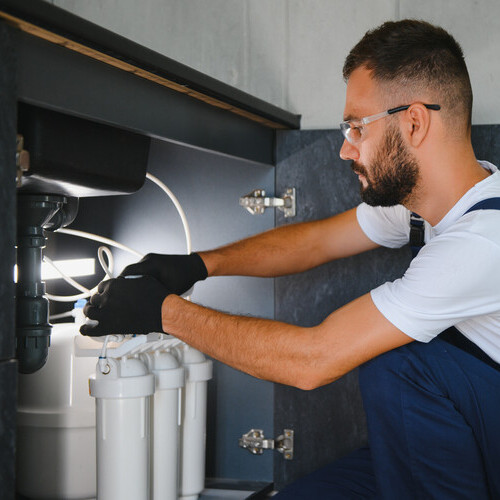
The taste and odor of household water can affect everything from drinking a glass of water to preparing coffee, cooking, and filling reusable bottles. Carbon filtration is a popular treatment option for improving these everyday experiences.
Guillen Family Plumbing provides carbon filtration system services in Hesperia, Victorville, CA, and surrounding High Desert communities. We help homeowners explore whole-house and point-of-use carbon filtration options based on their water quality concerns and plumbing systems.
Activated carbon filters are commonly designed to reduce chlorine-related taste and odor. Depending on their specific design and certified capabilities, some systems can also reduce other selected substances.
Whether you're interested in filtered water at your kitchen sink or a larger system serving multiple fixtures, choosing appropriate equipment is essential for effective treatment.
Activated carbon is a specially processed material with an extensive network of microscopic pores. These pores provide a large internal surface area that allows certain dissolved substances to attach to the carbon.
This process is called adsorption. As water flows through suitable carbon media, selected substances are retained on the carbon surface.
Activated carbon is often used to address chlorine taste and odor, as well as certain organic compounds when the particular filter is designed and certified for those reductions.
Carbon filters do not automatically remove dissolved hardness minerals, all microorganisms, or every possible water contaminant. Treatment effectiveness depends on the filter's specifications, water conditions, and maintenance.
A professional evaluation helps determine whether carbon filtration alone is appropriate or should be combined with another water treatment technology.
Carbon filtration systems are available in different configurations for whole-home and individual fixture applications. We help evaluate installation options for your property.
Evaluate carbon filtration systems installed near the main water entry point to treat water serving multiple fixtures.
Install appropriate point-of-use carbon filtration systems for kitchen drinking water applications.
Explore compact carbon block filters designed for specific flow rates and certified reduction applications.
Evaluate GAC treatment equipment for suitable whole-house or drinking water filtration needs.
Select carbon filters with verified performance for reducing chlorine taste and odor where appropriate.
Review replacement cartridges, carbon media, and maintenance needs for compatible existing filtration equipment.
Evaluate aging carbon filtration systems and suitable upgrades based on current water treatment goals.
Plan accessible valves, connections, service clearances, and bypass arrangements appropriate for selected equipment.
Many homeowners begin researching carbon filters when they notice changes in the taste or odor of their drinking water.
Chlorine is commonly used to disinfect municipal water supplies, and some people notice its taste or odor even when the water meets drinking water requirements.
A carbon filter certified for chlorine taste and odor reduction may improve those aesthetic characteristics.
However, unexplained discoloration, persistent unusual odors, or concerns about specific contaminants should be investigated rather than assuming a carbon filter will resolve them.
Reviewing your water supplier's quality report or obtaining appropriate testing can help establish whether carbon filtration matches your needs.
Explore Carbon Filtration OptionsProper filtration starts with identifying the treatment goal and selecting equipment appropriate for your property's plumbing.
We review the household's concerns, water source, available quality reports, and existing plumbing. Additional water testing may be appropriate when a specific contaminant is suspected.
Equipment is selected with attention to certified treatment capabilities, flow rate, installation space, service access, and suitable plumbing connections.
After installation, the connections and basic operation are checked. We review applicable startup procedures, cartridge replacement, and manufacturer-recommended maintenance.
Activated carbon has a limited capacity to adsorb substances. As the media is used, its ability to provide the intended treatment may decrease.
Replacement intervals depend on the specific product, water quality, flow rate, amount of water treated, and manufacturer instructions.
A filter may also experience reduced water flow when sediment or other material accumulates within the system.
Because changes in taste or odor do not reliably indicate every contaminant breakthrough, regular maintenance should be based on documented equipment requirements rather than taste alone.
A properly selected and maintained system offers a more dependable approach to meeting your filtration goals.
Learn more about activated carbon filters, drinking water treatment, filter performance, and professional installation.
Activated carbon filters are commonly used to reduce chlorine taste and odor. Certain models may also reduce specific organic compounds or other substances when designed and certified for those reductions. Check the individual product's performance claims before selecting it.
No. Carbon filtration is commonly used to address selected chemical substances and water taste or odor concerns. Traditional water softeners reduce calcium and magnesium hardness minerals. Carbon filters do not ordinarily soften hard water.
A whole-house system treats water supplied to multiple fixtures, while an under-sink system generally focuses on water used at one location. The better choice depends on the substances of concern, household water demand, installation requirements, and budget.
Replacement schedules depend on the particular filter, its rated capacity, water quality, usage, and manufacturer instructions. A filter should be replaced or serviced according to those requirements, even if water still tastes normal.
Standard carbon filtration should not be relied upon to remove or inactivate bacteria and viruses. If microbial contamination is a concern, appropriate water testing and a treatment method certified for the identified problem are necessary.
Guillen Family Plumbing serves Hesperia, Victorville, and surrounding High Desert communities. Call 760-995-1529 to discuss carbon filtration system options, equipment installation, and maintenance needs for your property.
Whether you're interested in improving drinking water taste, reducing chlorine odor, or installing a filtration system for multiple household fixtures, Guillen Family Plumbing can help you explore your options.
We provide carbon filtration system services for homeowners in Hesperia, Victorville, and surrounding High Desert communities, with a focus on practical equipment selection, professional plumbing installation, and long-term maintenance.